Build Detection Around The Risks
Intruder alarm installation starts with the building and the way it is used. A workshop, office and shop each have different entry routes, occupancy patterns and environmental conditions. A detector layout should address those conditions rather than apply the same package to every property.
We discuss alarms for Bradford businesses and public-sector premises, including upgrades when a system has become unreliable or difficult to operate. Recent changes such as an extension, new stock area or altered staff entrance can create gaps. A survey helps distinguish a coverage problem from a faulty device.
Before choosing equipment, check your insurer's requirements in writing. They may specify a grade, installer certification, maintenance or a monitoring arrangement. We do not assume that an app alert meets an insurance condition, and any provider approval needs checking for the proposed contract.
Choose The Right Detectors And Zones
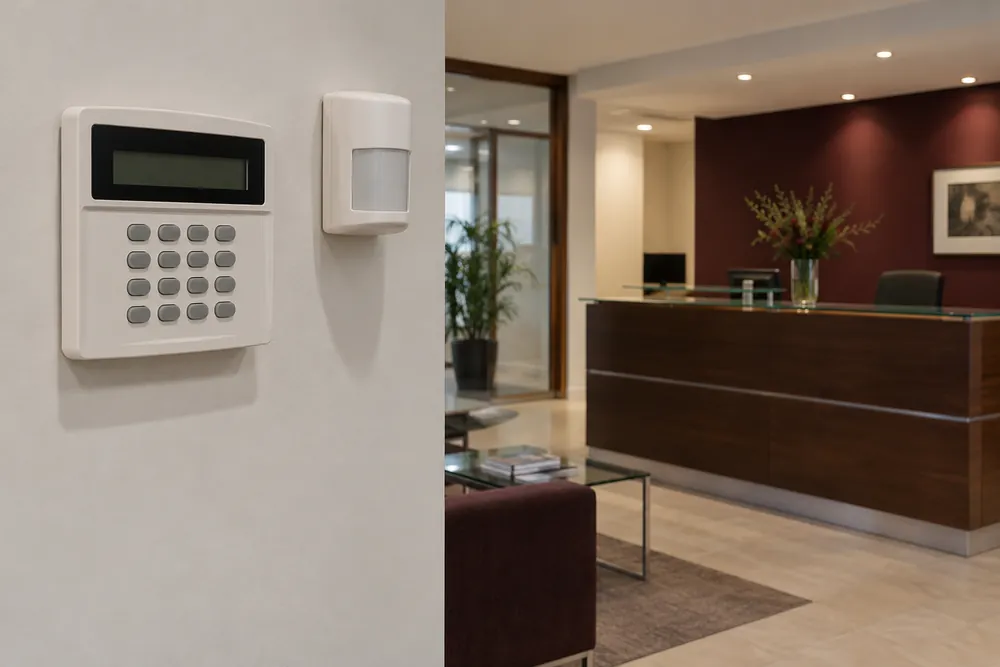
Door contacts can indicate an opening, while movement detectors watch an internal space. The choice and position depend on the likely route, room shape and conditions. Warm air, direct sunlight, vibration and normal activity can all affect detector selection.
Wired equipment can suit premises with accessible cable routes. Wireless equipment can reduce disruption in a finished property but needs suitable signal performance and battery management. A mixed system may be practical where some existing wiring remains useful.
Zones should make sense to the person setting the system. If an upstairs office remains occupied while the warehouse is closed, separate areas may be needed. Entry and exit arrangements should match the actual route people take, including anyone who opens or closes alone.
Standards And Alarm Response
PD 6662 is the UK scheme for applying relevant European intruder and hold-up alarm standards, including the BS EN 50131 family. The agreed grade and applicable requirements should be recorded in the specification. NSI's technical material explains this framework.
NSI: PD 6662 Alarm Standards ↗A sounding alarm, a notification to your phone and a monitored police-response arrangement provide different services. Police response needs the applicable security systems policy and an appropriate monitoring route. It cannot be promised simply because a new alarm has been fitted.
Police.uk: Monitored And Unmonitored Alarms ↗Where monitoring is required, the contract must define who receives signals and what they do next. The installer should explain the planned confirmation and keyholder arrangements. Ask for the actual terms instead of relying on a general claim that the system is monitored.
The Installation And Handover Process
First, the survey reviews accessible doors and windows, internal routes, existing equipment and available power. It also records who will use the alarm and any constraints on installation. This is the point to discuss pets, deliveries, cleaners or staff working outside normal hours.
Next, the proposal sets out the panel, detectors, notification method and any ongoing agreement. Installation includes the agreed cable work or wireless setup, device naming and user permissions. Work should be scheduled around the parts of the premises that need to remain open.
Commissioning checks detector operation, tamper conditions and the agreed signalling path. Users should practise setting and unsetting, understand entry warnings and know how to report a fault. Handover should include the equipment details and a clear route for maintenance.
What Affects The Alarm Quotation
Alarm cost depends on the size and layout of the property, detector choice and wiring condition. Difficult routes, separate outbuildings and added partitions can change the work. Reusing a panel depends on its support status, capacity and compatibility with the required devices.
Monitoring, connectivity and maintenance should be itemised separately from installation. Ask whether replacement batteries, additional users or app features create extra charges. Confirm what happens to remote features if an ongoing contract ends.
An alarm is one part of physical security and cannot replace suitable doors and locks. CCTV installation can provide a view of entrances, while access control manages authorised entry. Use the contact form to describe the property, existing equipment and any written insurer conditions.
Make User Training Practical
Choose the staff who will be shown the alarm before the handover visit. Include the people who actually open and close the building rather than relying on a manager to pass on instructions later. Agree how new users will be trained.
Each user should know which area they are setting, how long the agreed exit sequence allows and what a fault indication means on the chosen panel. Keep operating instructions somewhere authorised users can find them. Changes to cleaners, opening hours or keyholders should trigger a review of the user arrangements.