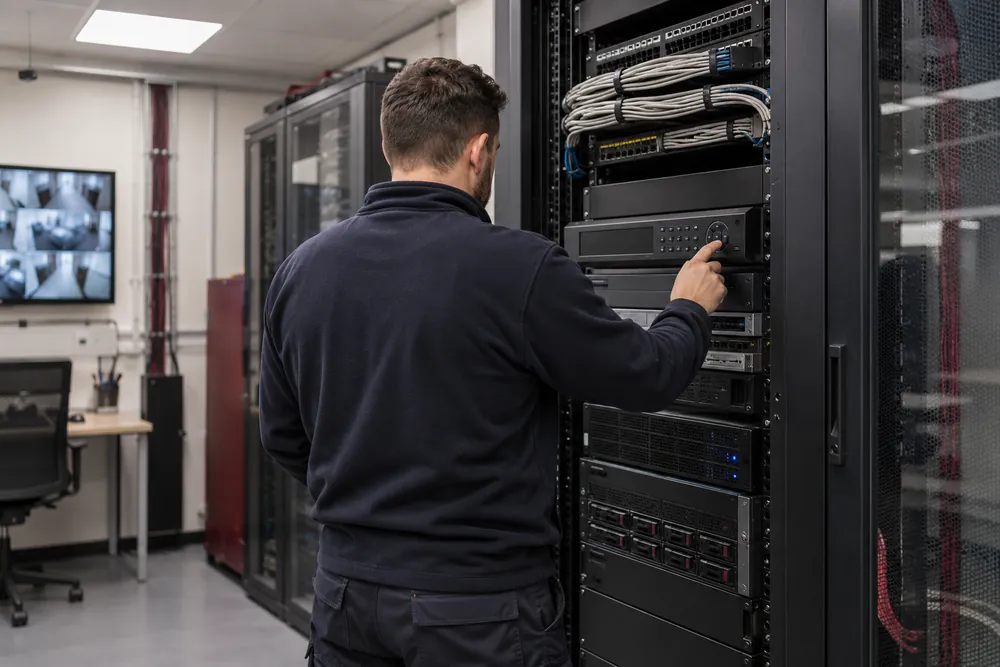
Check The Recording, Not Just The Screen
CCTV maintenance helps identify faults before you need a recording after an incident. A monitor can show a clear live image while a recorder has stopped saving footage. A useful visit checks the path from the camera to recorded playback and a practical export.
We discuss routine servicing and fault investigation for CCTV systems around Bradford. Missing images, incorrect times, repeated recorder warnings or remote viewing failures all need attention. An unexplained fault should be described clearly rather than hidden by repeatedly restarting the equipment.
Tell us the make of the recorder, the number of affected cameras and what you have already noticed. Do not share administrator passwords or sensitive clips through the enquiry form. Basic equipment details and a description of the symptom are enough to begin a discussion.
What A Maintenance Visit Should Cover
Camera checks include the mounting, housing, visible cable condition and image quality. Dirt, cobwebs and reflections can reduce useful detail, particularly in low light. New stock, vegetation or changes to parking can also obscure a view that originally met the brief.
Recording checks should cover the channels being saved, timestamps, storage condition and agreed recording settings. A sample search and export can reveal problems that a live view will not. The system should make sense to the authorised user rather than depend on undocumented steps.
Network and account checks matter where remote viewing is used. Supported firmware, appropriate permissions and the process for removing old users should be reviewed. Updates need planning so that configuration and recording are not lost through an untested change.
Standards, Privacy And Changes In Use
NSI's CCTV guidance covers design, installation and maintenance, with reference to BS EN 62676-4. A maintenance scope should describe what is actually checked and how findings are recorded. A brief visit cannot be assumed to certify every part of an existing system.
NSI: CCTV Design And Maintenance ↗Business CCTV retention should follow the purpose of the recording. Government guidance says images should be kept only for as long as the business needs them. A service visit is a useful time to check whether the configured period still matches that decision.
GOV.UK: Commercial CCTV ↗Changes to camera views may affect the privacy information and masking required. A moved camera is not just a mechanical adjustment if it begins recording a new area. The person responsible for the premises should authorise changes to the intended coverage.
A Practical Fault-Finding Process
First, the symptoms are recorded and the affected equipment is identified. A single camera failure suggests a different starting point from a whole recorder going offline. The engineer should separate a local display problem from a recording or network fault before proposing replacement equipment.
Next, accessible connections, power and relevant settings are checked within the agreed visit scope. Work at height or concealed cable investigation may require a separate arrangement. If parts are needed, compatibility and support status should be explained before they are ordered.
After work, the affected functions should be tested again. A written record should distinguish completed repairs, observations and recommendations requiring another decision. You should know whether the original problem has been resolved and which limitations remain.
Maintenance Cost And Repair Decisions
CCTV maintenance cost depends on system size, accessibility, equipment condition and the depth of checks agreed. High-mounted cameras may need access equipment. A recorder fault can require more investigation than a dirty lens, even when both initially appear as poor picture quality.
Ask whether a visit includes cleaning, recording checks, software work and a written report. Parts, data recovery and out-of-scope cabling may be separate. For an ongoing agreement, confirm the visit schedule and what support is actually included.
There are times when selective replacement is sensible, especially for unsupported equipment or a recorder that no longer meets the required coverage. Compare that proposal with a new CCTV installation rather than replacing components without a plan. For a larger site, our commercial CCTV guidance explains how to define the operational requirement.
Keep A Useful Fault Record
Write down when the fault first appeared and whether it affects live view, playback or both. Note whether other equipment also lost power or network access at the same time. These observations can help focus the first checks without requiring you to open equipment or attempt repairs.
Keep previous service reports and equipment details together if you have them. An accurate record helps distinguish a recurring problem from a new issue and makes later repair proposals easier to assess. Authorised user access should be arranged securely before a visit rather than sent through a public enquiry form.